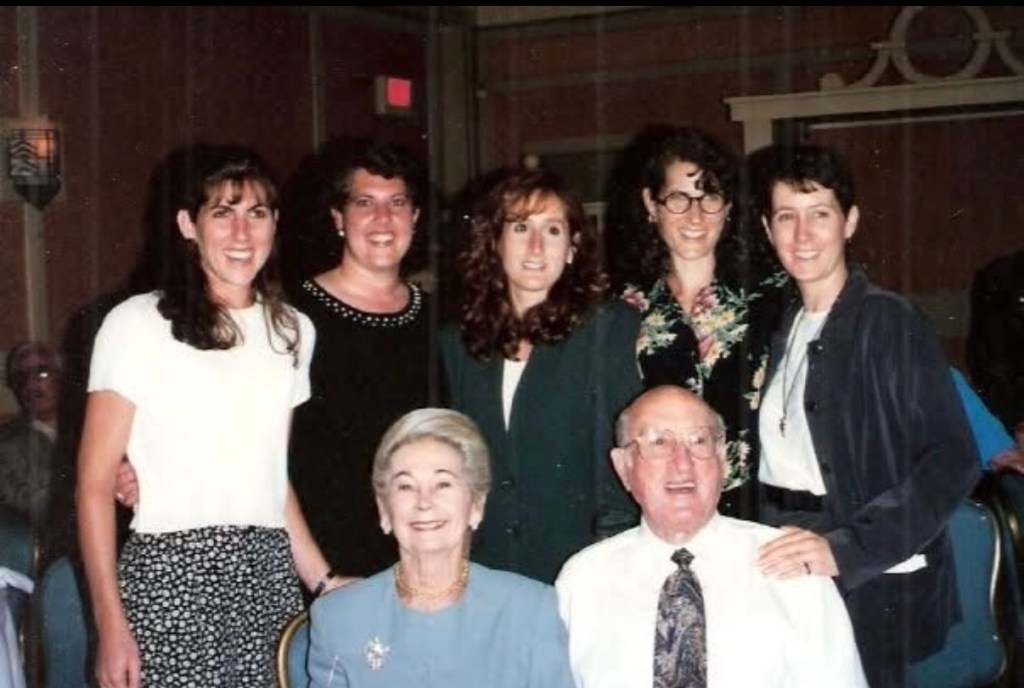
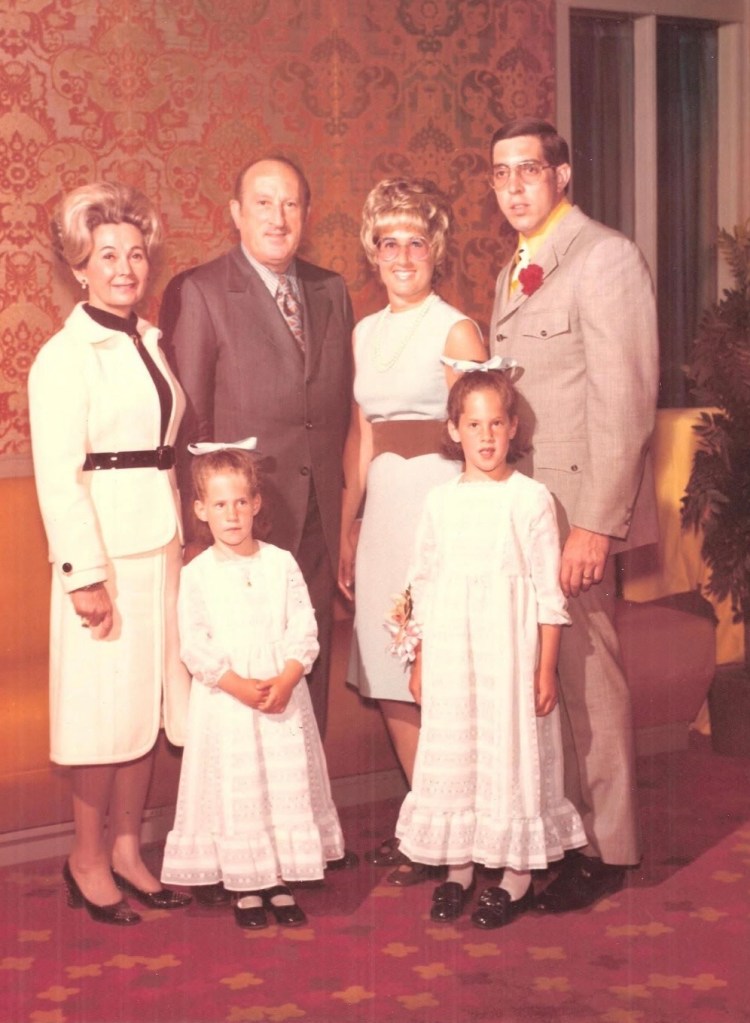
My grandfather Charlie was born in Chicago.
When he was two years old, his mother left. He didn’t get the luxury of a long childhood.
His father remarried. There were more children. And somewhere along the way, my grandfather became responsible — not because he wanted to be, but because he had to be.
He plucked chicken feathers to help support the family.
He delivered newspapers.
He sold apples on street corners.
Whatever needed to be done, he did it.
When Henry Ford announced he would pay workers five dollars a day in Detroit during World War I, the family moved. Imagine being a little boy in that moment — not dreaming about toys or games — but about helping keep the lights on.
He learned early that you take care of your people.
Somewhere between selling apples and delivering newspapers, my grandfather became a young man.
He met my grandmother at the Jewish Community Center in Detroit. He played on the men’s basketball team. She played on the girls’.
My grandmother was a wonderful seamstress. She took her uniform — which she laughingly referred to as her “big bloomers” — and tailored them to be more form-fitting.
My grandfather noticed.
Of course he did.
He asked her out. Their first date was at a JCC dance. (Family lore says he even had to fend off a short, bald rival for her affection. I choose to believe he won fair and square.)
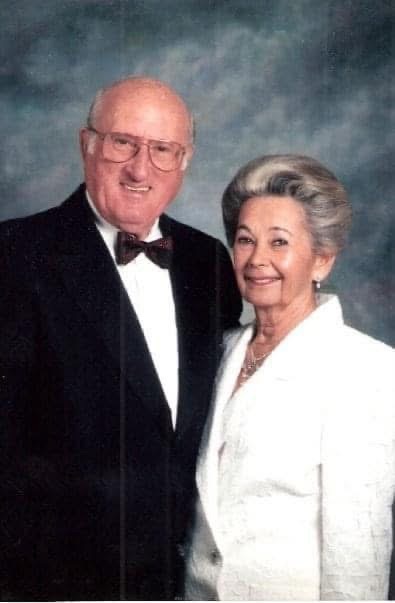
They didn’t have money when they married in 1936. Not really. Just determination. Partnership. And the kind of grit that comes from knowing what it means to have very little.
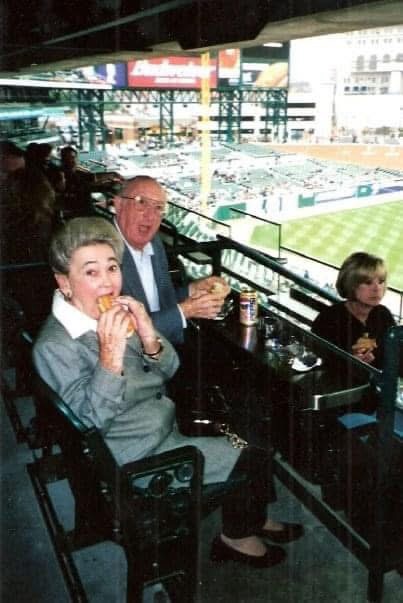
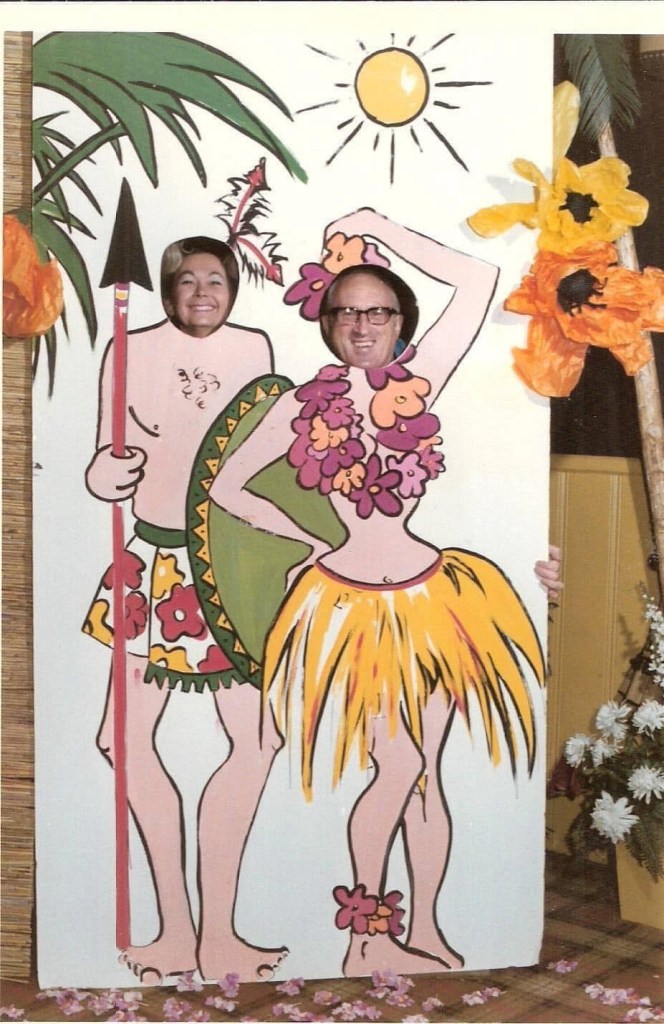
Over sixty-nine years of marriage, they built a beautiful life together.
He didn’t start in a corner office.
He started as a truck driver for a coffee company — early mornings, long routes, customers to satisfy. And over decades — not years, decades — he worked his way up until he became president of that very same company.
He didn’t leapfrog.
He didn’t shortcut.
He built it.
Even into his eighties, they wouldn’t let him retire. He became a consultant because they still needed him — his instincts, his relationships, his ability to connect. He was a wonderful salesman. Not slick. Relational. The kind of man people trusted.
Maybe that’s why he was so generous.
He knew what it felt like to struggle. He knew what it meant to work for every dollar. So when he had the ability to help, he did.
Quietly. Consistently. Without fanfare.
What I remember most isn’t the title.
It’s the generosity.
Every Valentine’s Day.
Every birthday.
A check. Fifty dollars. Without fail.
After he died, I found his old check registers. There we were — all seven grandchildren — listed neatly in a row for Valentine’s Day. Fifty dollars each. From the oldest to the youngest.
It wasn’t random.
It wasn’t occasional.
It was deliberate.
If I was heading off on a trip, he would press a $50 bill into my hand.
When I was a senior in college and needed help finishing, he paid my tuition so I could graduate.
Sunday nights were dinner at Knollwood Country Club.
And every Saturday morning — even when my sisters and I lived across the country — he would wake up, have his coffee, and call the three of us.
Not text.
Not delegate.
Call.
He had taken care of people since he was a little boy plucking chicken feathers.
He never really stopped.
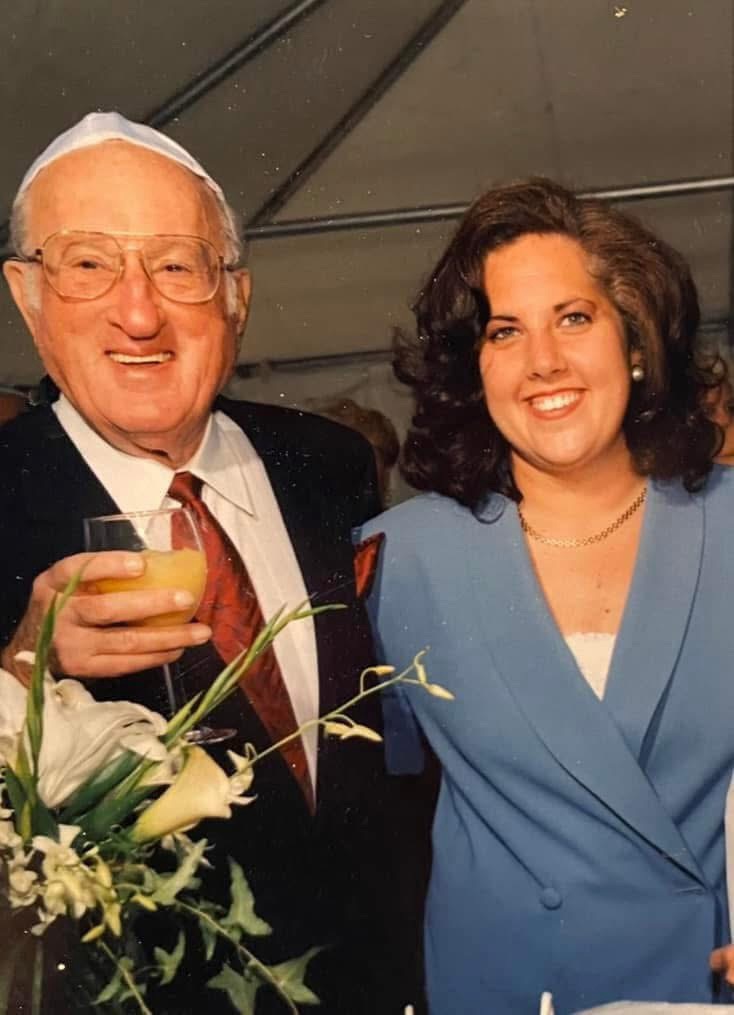
When he stopped driving, I became the one behind the wheel. I would pick him up for dinner or take him to my mom’s house. Those car rides — just the two of us — are some of the moments I treasure most.
He had spent his life taking care of everyone else.
I was lucky enough to take care of him, even just a little.
I was forty-three when he died. At the time, all I could think was that I wished I’d had longer.
Now, with a little more life behind me, I understand something else.
I was lucky.
Lucky to know him as a child.
Lucky to know him as a man.
Lucky to sit across from him at dinner.
Lucky to be on the receiving end of his steady generosity.
He would probably be embarrassed by all of this. He was never flashy. Never one for praise.
But some lives deserve to be written down — especially the ones built quietly.
If you asked him how he was, the answer was always the same:
“I’m fantastic… but I’m getting better.”
It didn’t matter if he had just had a heart attack. It didn’t matter if he was in the hospital. That was his posture toward life.
Fantastic.
And still improving.
When the coffee company threw his retirement party, every guest received a crystal candy dish filled with chocolate-covered coffee beans. Engraved across the top:
Charlie Litt
He’s fantastic… but getting better.
I still have that crystal candy dish. It sits on a bookshelf in my den. Every now and then I glance at the engraving and smile.
He was fantastic.
And somehow, even now, he’s still making me better.
When my mom spent the last two years of her life flat on her back in a hospital bed, we would call in the morning and ask, “How are you?”
She would say, “I woke up. It’s a good day.”
She got that from her father.
Optimism wasn’t denial in our family. It was discipline. It was gratitude. It was a choice.
More than the crystal dish or the checks or the Sunday dinners, I’m grateful I inherited at least a little of that optimism.
It’s the gift that keeps showing up long after they’re gone.
And once you were in his circle, you were in it.
Divorce didn’t change that. Distance didn’t change that. Time didn’t change that.
He loved steadily. Optimistically. Generously.
And I am living a beautiful life because I was inside that circle.
From Juju with love 💙
 From JuJu with Love
Leave a comment