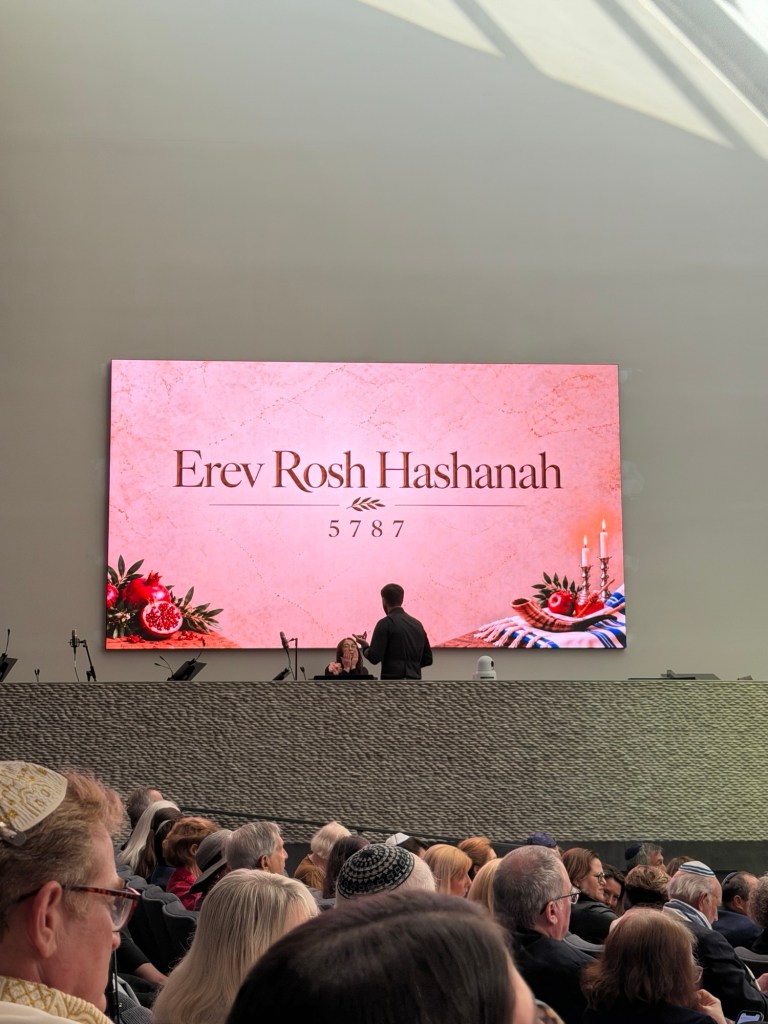
My family‘s history with Temple Israel began with my grandparents. My father celebrated his bar mitzvah there at the old Temple in Detroit in 1955, and I have called Temple Israel my religious home since I was eight years old. Its sanctuary has held generations of our family’s simchas and sorrows. Temple Israel isn’t simply where my family worships, it’s woven into who we are.
On March 12, one man tried to take away our sense of safety and our joy. But tonight, six months after the attack, we will walk back into our sanctuary — a congregation 3000 families, strong — and welcome the new year together.
We are still here.
We are home.
I wrote those words before I left for services. I knew returning would be emotional. I don’t think I understood just how emotional until I arrived and saw the enormous sign welcoming us back.
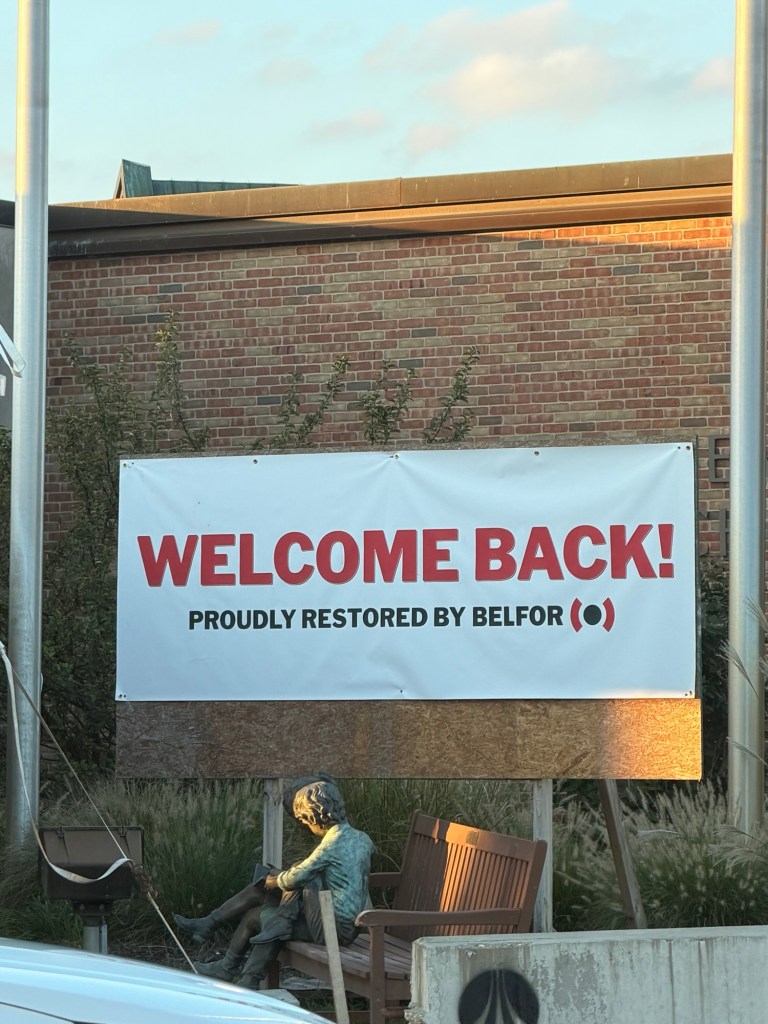
Everywhere I turned, greeters and ushers wished us a happy new year and said the same two words:
Welcome home.
I began tearing up almost immediately.
It was the most un–Rosh Hashanah-like Rosh Hashanah service I had ever attended.
We did not read from the Torah. Our prayer books were borrowed. Officers in SWAT gear stood outside.
And somehow, it was the perfect Rosh Hashanah.
Because this year, the most sacred words spoken at Temple Israel may have been the simplest:
Welcome home.
For six months, our ark stood empty.
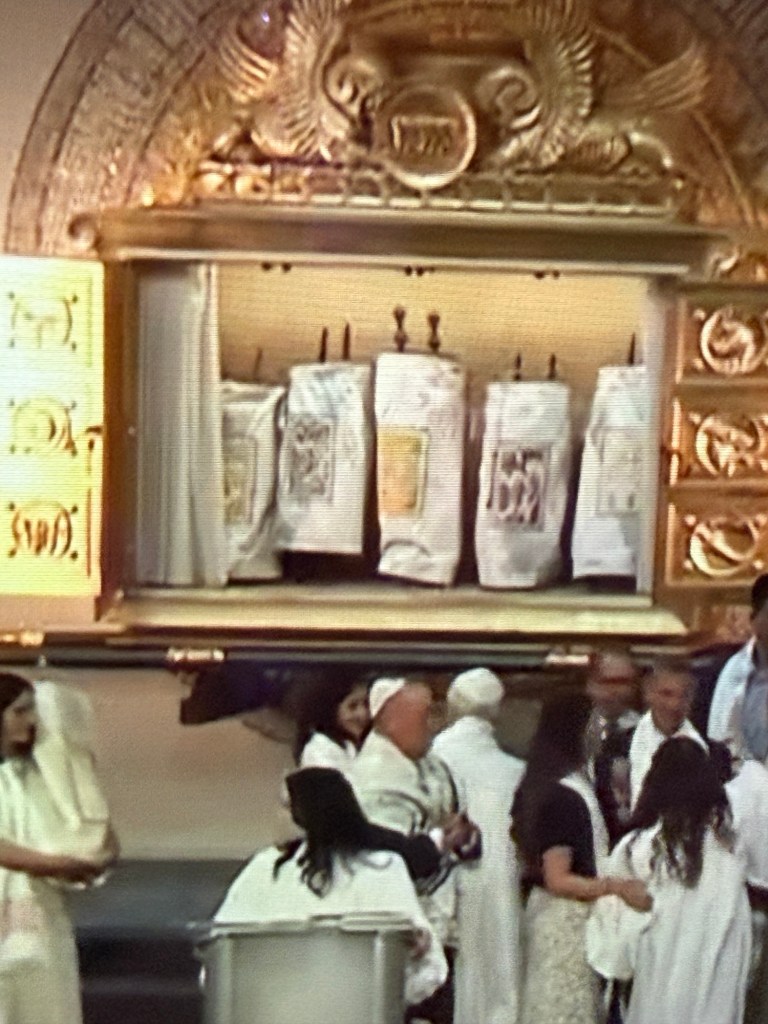
Our Torah scrolls had survived the attack, but they were taken to other temples and to the Holocaust Memorial Center for safekeeping while our sanctuary was restored.
Tonight, they came home too.
At the beginning of the service, each Torah was carried into the sanctuary and returned to its place in the ark. Among those given this sacred honor was the head of our security team, who had been severely injured while protecting the children in our school during the attack. He is still recovering. As he carried the Torah home, the congregation rose and gave him a standing ovation.
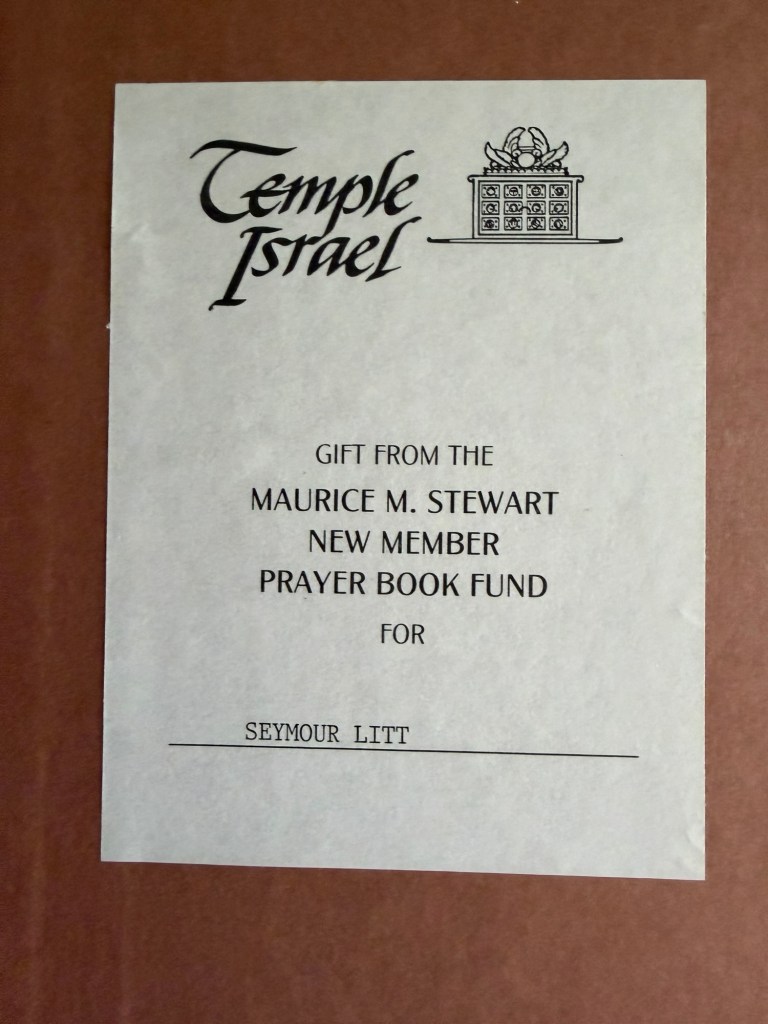
Our prayer books had been destroyed by smoke and sprinklers after the attack. The books provided for our Rosh Hashanah services had been donated by congregations from across the country—sacred gifts from Jewish communities that had opened their hearts to ours.
But I carried my grandfather’s prayer book with me.
As I sat in the sanctuary I had called home since I was eight years old, I was not only returning for myself. In some way, I was carrying my grandfather—and all the generations of my family who had worshipped there—home with me.
Instead of delivering a traditional sermon, the rabbi used the time to honor those who carried Temple Israel through the March 12 attack and its aftermath. The four security officers who were in the building carried the Torah scrolls, followed by aliyot for the teachers, staff, executive committee and board members who helped protect and guide our community and the architects and restoration team who rebuilt our synagogue. Each group received a standing ovation. It wasn’t a sermon in the traditional sense. It was the story of the people who made a six-month miracle possible—and brought us home in time to begin a new year together.
And then the rabbi shared one final miracle: through the attack and everything that followed, the eternal light in our sanctuary survived. The building needed to be rebuilt, but the light never went out—a fitting symbol of the resilience of Temple Israel and the Jewish people.
When we walked outside after services, officers in tactical gear and protective vests were still there, along with an armored police vehicle. It was a sobering reminder that returning home did not mean pretending the attack had never happened—or that the danger facing Jewish communities had disappeared.

As we left, we thanked the officers for protecting us and making it possible for us to worship together safely. Gratitude had been the theme of the entire evening, and it followed us all the way into the parking lot.
My family gathered in Chicago for Rosh Hashanah this year. As my aunt and cousin were driving there, they called to tell me they missed me and wished I were joining them. I missed them too.
But I knew I needed to be at Temple Israel this year.
I walked in with Janet and Shoshana—my chosen family—and carried generations of my own family with me. My grandfather’s prayer book was in my hands. My mother’s heart necklace rested against my chest. My father had celebrated his bar mitzvah at Temple Israel more than seventy years earlier.
It was a strange way to spend Rosh Hashanah, separated from my family—and yet surrounded by family everywhere I looked.
A sacred community is not defined by its walls. And yet, there is something profoundly special about coming home.
Our sanctuary holds more than our services. It holds our memories, our simchas and our sorrows, the voices of those beside us and the love of those who are no longer here to sing with us.
One man tried to take away our safety and our joy. He failed.
We are still here.
We are grateful.
After six months away, we are finally home. And there truly is no place like home.
From Juju with love 💙
Last night, I gathered around my friend Janet’s table with nine members of my chosen family. I still missed the family celebrating together in Chicago. But this Rosh Hashanah has reminded me that home is not only a building, and family is not defined only by blood.
I am grateful for the people who have opened their homes, their arms and their hearts to me.
What a blessing it is to begin the new year surrounded by good friends.
 From JuJu with Love
Leave a comment