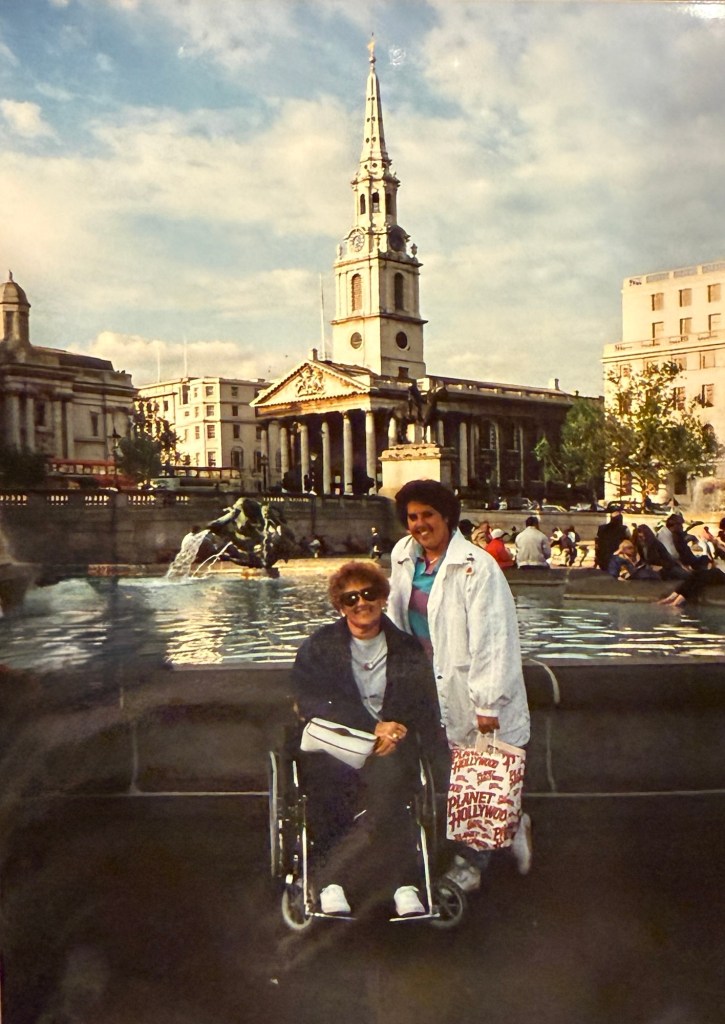
I recently found something I thought was lost forever.
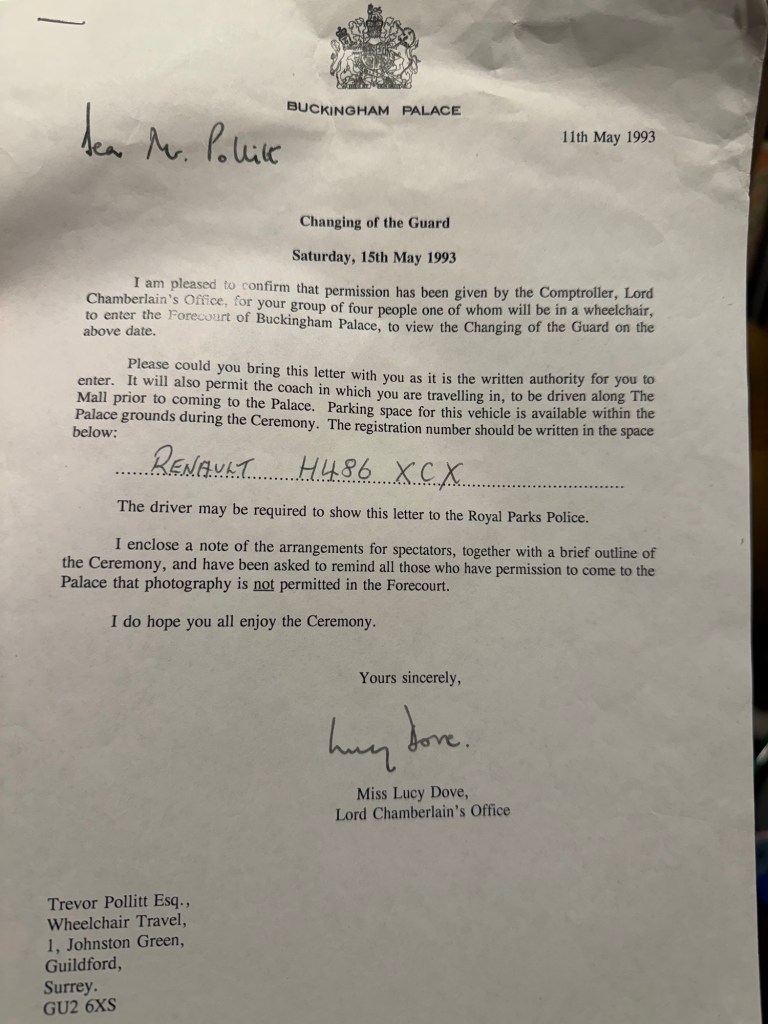
Tucked inside an old box was a slightly crumpled letter on Buckingham Palace letterhead, dated May 1993. I recognized it instantly, even before I finished reading the first line. It was the letter—the one that granted my mom, her caregiver and I (plus our driver) special permission to enter the forecourt of Buckingham Palace to watch the Changing of the Guard.
From inside the gates.
At the time, I didn’t fully understand how extraordinary that was. I just knew it felt magical.
My mom believed—deeply—that limitations never meant she had to miss out. Even after spending the last two years of her life largely confined to a hospital bed, she woke up every morning grateful. “It’s a good day, I woke up,” she would tell us. That mindset shaped how she lived, and how she traveled.
When we went to London, my mom worked with a small travel agency in Birmingham, Michigan that specialized in travel for people with disabilities. Every detail was thoughtfully arranged. Because she couldn’t navigate public transportation, we had a car and a driver. What I didn’t realize until much later was just how much advocacy and planning went into what happened next.
The letter confirms it all in careful, formal language: permission granted by the Lord Chamberlain’s Office; entry into the forecourt; allowance for a vehicle to drive through the palace gates; acknowledgment that one member of the group would be in a wheelchair. Even the car’s registration number was handwritten into the document.
That morning, we drove through the gates of Buckingham Palace—something most visitors only glimpse from afar—and took our place inside the palace grounds. The ceremony unfolded around us: the music, the precision, the pageantry. It felt surreal and deeply personal at the same time.
For years, I occasionally wondered why I didn’t have any photographs from that moment. I’ve traveled the world and documented so much—surely I would have taken at least one picture.
Then I reread the letter more carefully.
Near the end, almost as an afterthought, was the answer: Photography is not permitted in the forecourt.
And suddenly, it all made sense.
There are no photos because there were never meant to be any.
That memory lives exactly as it should—untouched, unfiltered, and fully present. No lens between us and the moment. Just my mom, that unbelievable day, and the quiet triumph of knowing she refused to let her circumstances define what was possible.
This letter survived decades in a box. The memory never needed preserving.
Some moments are meant to be lived, not captured.
This is one of mine.
From Juju with love 💙✈️ 🇬🇧


Leave a comment